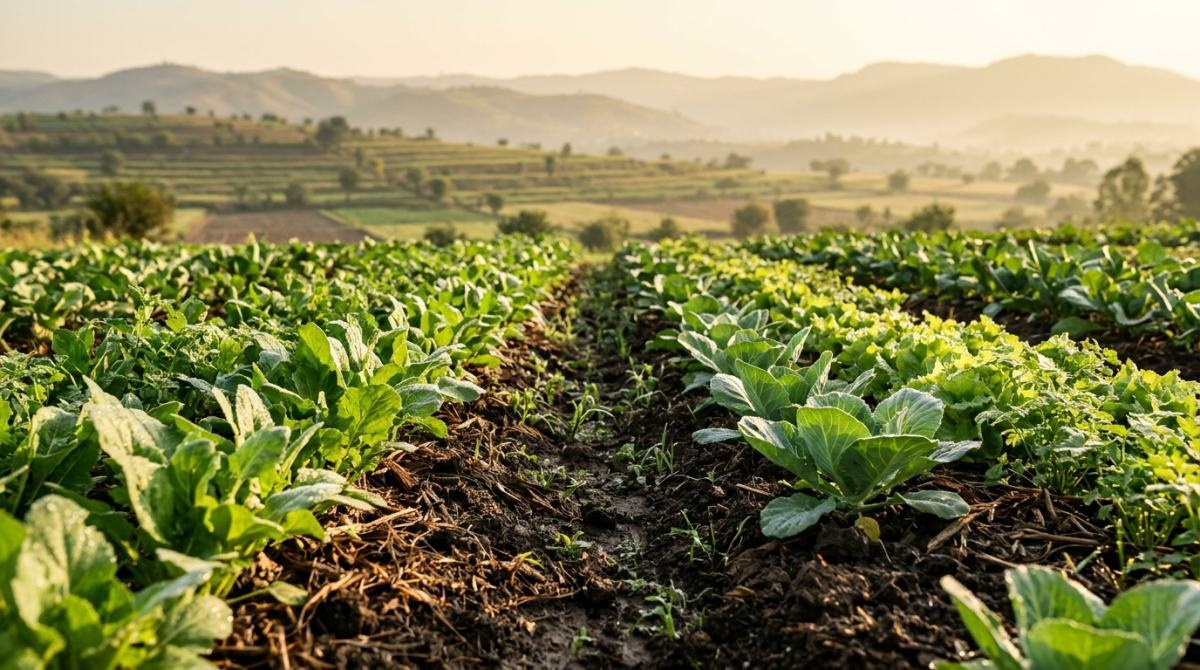
ISLAMABAD: A remarkable agricultural transformation on the outskirts of Islamabad is drawing attention from farmers and agribusinesses across Pakistan. Just four years ago, the 2.5-acre parcel was little more than a quiet weekend farmhouse; today, it is projected to yield Rs 7 to 8 million in annual agricultural revenue.
The secret behind this turnaround is regenerative farming — an approach that restores soil biodiversity, retains moisture naturally, and replaces costly synthetic fertilizers with rich organic compost and biological soil amendments.
Instead of relying on a single seasonal monocrop, regenerative farms combine high-value vegetables, herbs, orchards, and rotational cover crops tailored to local demand in Islamabad and Rawalpindi. Over four years, improved soil structure has steadily boosted yields while cutting input expenses.
Agricultural experts say this model offers a practical blueprint for Pakistan's small and medium landowners facing rising fertilizer prices, water stress, and climate variability.